
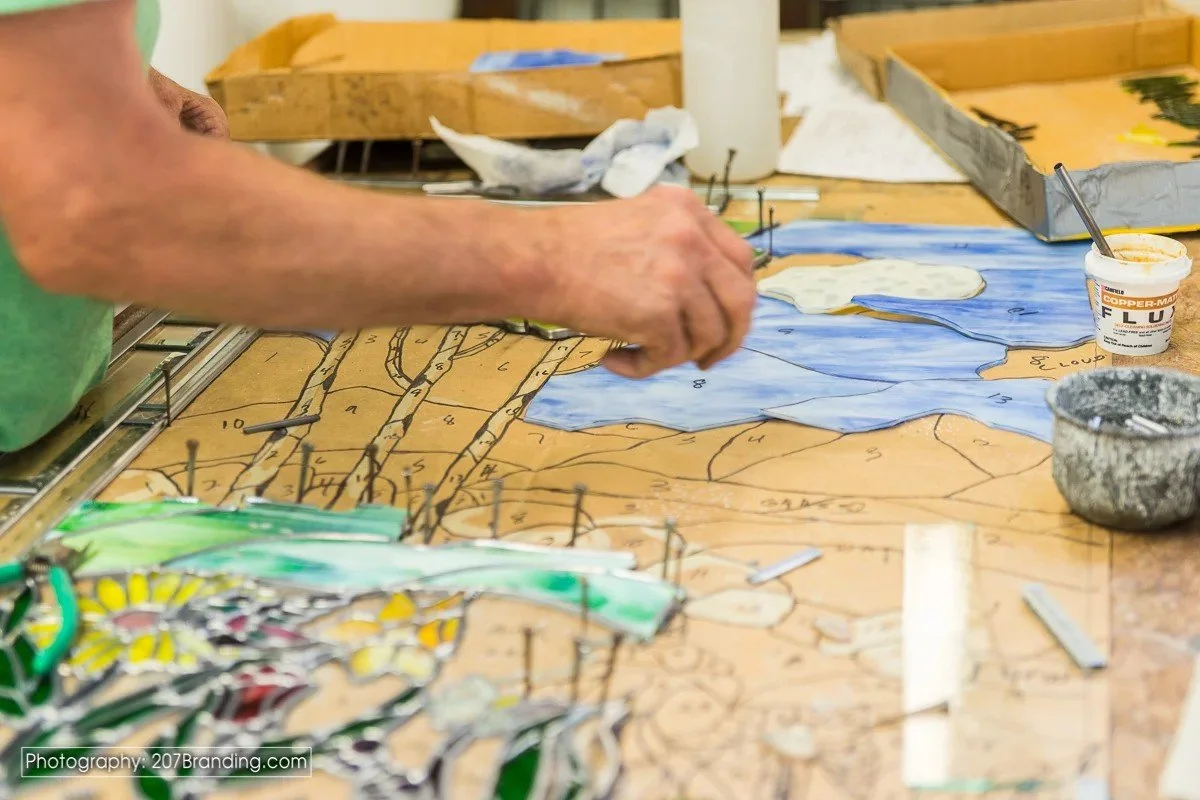
Stained Glass Repair in Denver: Signs Your Glass Needs Help
/Quick answer: If your stained glass has a cracked or missing piece, a panel that bulges or sags, glass that rattles when the door closes, or daylight showing through gaps in the lead, it's time to call a pro. For stained glass repair, Denver homeowners can turn to The Glass Master, Steve Downing's studio in Thornton, just north of the city. Catching problems early usually means saving more of the original glass.
Why the New Year Is a Good Time to Check Your Stained Glass
The holidays are wrapping up, the decorations are coming down, and the low winter sun is hitting your windows at an angle that shows every flaw. That makes the first weeks of the year a great time to walk around the house and really look at your stained glass.
Colorado is hard on glass. We get big temperature swings between day and night, dry air, wind, and the occasional hailstorm. Over the years, all of that can loosen panels and stress the lead and solder that hold a piece together. A quick check now can keep a small repair from turning into a big one.
Signs Your Stained Glass Needs Repair
Cracked, Broken or Missing Pieces
This is the one everybody notices first. A single cracked piece might seem like no big deal, but cracks can spread, and a broken piece weakens the panel around it. If a piece is missing entirely, wind and moisture now have a way in.
Bowing or Bulging Panels
Stand to the side of the window and look across the glass. If the panel curves in or out instead of sitting flat, the structure is tired. Bowing is common in older leaded windows and doors and tends to get worse with time.
Rattling Glass or Loose Lead
If you hear a buzz or rattle when you shut the door or when the wind picks up, the glass is moving inside the lead channels. That movement wears on the panel every single day.
Gaps, Light Leaks and Drafts
Hold your hand near the edges on a cold morning. Drafts or visible daylight around the frame or between pieces mean the panel isn't sealed the way it should be.
Cloudy, Dirty or Darkened Lead Lines
Not every problem is structural. Sometimes years of grime simply dull the colors. A good cleaning can bring a piece back to life, but it should be done carefully so you don't stress already weak joints.
Repair or Full Restoration?
Most problems fall into one of two camps. A repair fixes something specific: a cracked piece, a loose section of lead came (the H-shaped channel that holds each piece of glass), or a failing solder joint. A restoration goes further and addresses a panel that's tired all over, which can mean taking it apart, cleaning the glass and rebuilding it with new lead. The right answer depends on how widespread the damage is, and that's something you only learn by looking closely.
What a Repair Visit Looks Like
Every piece of stained glass is different, so there's no one-size-fits-all fix. The first step is always to look at the glass and figure out what's actually going on: Is it one broken piece, or is the whole panel giving out? Is the frame sound? Is the glass worth saving as-is, or would you be happier with a new design in the same opening?
From there, Steve will talk you through your options in plain language. He's been building and fixing stained glass since he founded The Glass Master in 1989, and his clients count on him to be straightforward about whether a piece is worth repairing. Some panels just need a damaged piece replaced. Others need more involved restoration work. And sometimes the best answer is a brand-new custom piece built to fit the existing frame, something we've done many times for Denver homeowners whose original glass was past saving.
Tips Before You Call
- Take photos. Get a straight-on shot of the whole piece and close-ups of any damage. It helps start the conversation.
- Measure the opening. Rough height and width are fine for a first call.
- Don't tape or glue it. Household tape and glue can leave residue that makes a proper repair harder.
- Note the location. Is it a front door, a sidelight, a transom, a cabinet? Where the glass lives affects how it's repaired.
Serving Homeowners Across the North Metro
Our studio is in Thornton, which puts us close to homeowners in Northglenn, Westminster, Broomfield, Brighton, Arvada and throughout Denver. Whether your glass is in a historic home near downtown or a newer build out by Brighton, the process starts the same way: a conversation about what you have and what you want.
Frequently Asked Questions
Can a single cracked piece of stained glass be replaced?
Often, yes. In many cases one damaged piece can be removed and replaced without rebuilding the whole panel. Whether that's the right move depends on the condition of the surrounding lead and glass, which is why it helps to have the piece looked at.
Is it worth repairing old stained glass, or should I replace it?
It depends on the glass, the condition and what it means to you. Family or original glass is often worth saving. If the piece is badly damaged or you never liked the design, a new custom piece made for the same opening can be a great option.
Do you repair stained glass in doors as well as windows?
Yes. Doors, sidelights, transoms, cabinets and windows all come through our studio. Doors take more of a beating than windows, so they often need attention sooner.
How do I know if my stained glass is bowing?
Look across the surface from the side. If the panel isn't flat, or if it moves when you press gently near the center, it's likely bowing and should be looked at.
Get Your Stained Glass Looked At
If something in your stained glass doesn't look or sound right, don't wait for it to get worse. Call Steve at (303) 457-1886, any day from 7am to 5pm, or send us a message through our contact page. You can also browse our stained glass gallery for ideas and meet Steve Downing, the artist behind The Glass Master.


