
January 2026 Archive

How to Clean Stained Glass Windows Without Damaging Them

Quick answer: To clean stained glass windows, dust them first with a soft, dry cloth, then wipe gently with a soft cloth dampened in plain water or water with a drop of mild, pH-neutral soap. Dry right away. Skip ammonia, vinegar, abrasive pads and spray-on glass cleaners, and never press hard on bowed or loose sections. If cleaning reveals cracks, loose lead or rattling glass, have a stained glass pro take a look.

Why Stained Glass Needs Gentle Cleaning

A stained glass window isn't one sheet of glass. It's dozens or hundreds of pieces held together with lead or copper foil and solder. The glass itself is tough, but the joints and the cement that seals them aren't built to handle harsh chemicals or heavy pressure. Clean it the way you'd clean a family heirloom, because in many homes that's exactly what it is.

Here along the Front Range, dust and dry air mean windows collect a film faster than you might expect. A careful cleaning a couple of times a year keeps colors bright and gives you a chance to spot problems early.

What You'll Need

  • Two or three soft, lint-free cloths (microfiber works well)
  • A soft brush, such as a clean paintbrush or soft-bristled makeup brush
  • A bowl of lukewarm water
  • A drop of mild, pH-neutral dish soap (optional)
  • Cotton swabs for corners

Step-by-Step: How to Clean Stained Glass Windows

Step 1: Check the Window First

Before you touch anything, look the panel over. Is it flat? Do any pieces move or rattle? Are there cracks? If the panel is bowing or loose, clean only very lightly or wait until it has been repaired.

Step 2: Dust Gently

Use a dry, soft cloth or brush to remove loose dust. Work along the lead lines rather than scrubbing across them. Dust that gets rubbed around with water can act like fine sandpaper.

Step 3: Wipe With Water

Dampen a cloth in plain lukewarm water and wring it out well. You want it damp, not dripping. Wipe each section gently, supporting the glass with your other hand on the opposite side if you can reach.

Step 4: Add Mild Soap Only if Needed

For greasy spots, such as a kitchen window, add a single drop of mild soap to the water. Wipe, then go over the area again with a cloth dampened in clean water so no soap is left behind.

Step 5: Dry Right Away

Use a dry cloth to pat the glass and lead dry. Standing water can work its way under the lead over time.

Do's and Don'ts

Do

  • Support the panel while you clean
  • Use soft cloths and light pressure
  • Clean on a mild day, not when the glass is very hot or very cold
  • Keep any broken fragments you find, since they help with repairs

Don't

  • Use ammonia-based glass cleaners or vinegar
  • Use abrasive sponges, steel wool or razor blades
  • Spray liquid directly onto the window
  • Use a pressure washer on the outside
  • Push on bowed sections to "straighten" them

What About Painted or Antique Glass?

Some older windows have painted details fired onto the glass. Those painted areas can be more delicate. If you have an antique or historic window and aren't sure what it is, use only a dry, soft brush and ask a professional before doing more.

When Cleaning Turns Into a Repair

Cleaning is a great time for a checkup. While you're wiping, watch for:

  • Cracked or missing pieces
  • Lead that looks crumbly, cracked or powdery
  • Light showing between the glass and lead
  • Glass that rattles or moves when touched

If you find any of these, it's time for a repair visit. Steve Downing has been building and caring for stained glass since founding The Glass Master in 1989, and he'll tell you honestly whether a window needs attention now or can wait.

Serving Homeowners Across the North Metro

Our studio is in Thornton, close to Northglenn, Westminster, Broomfield, Brighton, Arvada and Denver, so if cleaning turns up a problem, help isn't far away.

Frequently Asked Questions

Can I use Windex on stained glass?

It's best to avoid ammonia-based glass cleaners. Plain water or water with a drop of mild soap is gentler on the lead and cement.

How often should I clean stained glass windows?

For most homes, a gentle cleaning once or twice a year is plenty, with occasional dusting in between. Kitchen windows may need it more often.

Can I clean the outside of a stained glass window?

Yes, gently, the same way you clean the inside. If there's protective glass over the outside, clean that like a normal window.

What if the lead looks white or chalky?

That can be oxidation. Don't scrub it hard. If it's widespread or the lead looks crumbly, have a stained glass pro look at the window.

Need a Hand With Your Stained Glass?

If cleaning shows your stained glass needs more than a wipe-down, call Steve at (303) 457-1886, 7am to 7pm daily, or send a message through our contact page. For ideas, browse our windows gallery or the full stained glass gallery.

Leaded Glass Window Repair: Bowing, Loose Lead and Cracks

Quick answer: Leaded glass window repair usually addresses one of three problems: bowing panels, loose or failing lead, and cracked or broken glass. Small problems can often be fixed in place or with a single piece replaced, while widespread lead failure may call for reinforcing or re-leading the panel. A stained glass craftsman should look at the window before you decide, because the right fix depends on how much of the panel is affected.

How a Leaded Glass Window Holds Together

A leaded window is made of many individual pieces of glass held in strips of lead came, which is shaped like an "H" in cross section. The joints where the came meets are soldered, and a cement or putty is worked under the lead to seal the glass and stiffen the panel.

It's a smart system that has worked for centuries, but lead is soft. Over time, gravity, wind, temperature swings and the weight of the glass itself all push on the panel. Here in Colorado, where days can be warm and nights cold, that movement never fully stops.

The Three Most Common Problems

Bowing

If you look across a leaded window from the side and see it curving in or out, it's bowing. Bowing happens when the panel can no longer support its own weight, and it usually gets worse slowly. A badly bowed panel puts stress on the glass and can eventually crack it.

Loose or Failing Lead

Loose lead shows up as rattling glass, gaps along the edges of pieces, or lead lines that look cracked, powdery or pulled away. Solder joints can also break, leaving sections that flex when you press gently.

Cracked or Broken Glass

A single crack is the easiest problem to spot. It might come from a hailstone, a slammed door, a stray ball or simple stress from bowing. One crack doesn't always mean the whole window is in trouble, but it's a good reason to have the panel checked.

Reinforce, Repair or Relead?

This is the big decision, and it depends on how widespread the damage is.

When a Spot Repair Makes Sense

If the panel is mostly flat and sound and the problem is a cracked piece or a broken joint, a targeted repair is often enough. A damaged piece can sometimes be replaced by carefully opening the surrounding lead, setting a new piece and resoldering.

When Reinforcing Helps

Larger panels sometimes need extra support so they don't bow again. Reinforcement adds strength to the panel and is often part of a repair rather than a separate project.

When Re-Leading Is the Better Answer

When the lead itself is worn out across the window, patching one spot just moves the problem somewhere else. Re-leading means taking the panel apart, cleaning each piece of glass and rebuilding it with new came. It's the most involved option, and it's how old windows get a fresh start.

What Not to Do

  • Don't push a bowed panel back flat. The glass can crack.
  • Don't use caulk or glue on loose pieces. It makes a proper repair harder later.
  • Don't scrub the lead with harsh cleaners. Gentle is always better.
  • Don't wait too long. Small leaded glass problems grow over time.

How Steve Approaches Leaded Glass

Steve Downing has been working with leaded glass since he founded The Glass Master in 1989. His signature work combines traditional lead came with copper foil, so he knows both methods inside and out, which helps when a repair involves an older panel built one way or the other. He'll tell you plainly what he sees, what can be saved and what the options are, so you can make the call that's right for your home.

Serving the Denver Metro

From the studio in Thornton, we're close to homeowners in Northglenn, Westminster, Broomfield, Brighton, Arvada and across Denver. Older homes in Denver's established neighborhoods often have original leaded glass, but newer homes have leaded windows and doors that need attention too.

Frequently Asked Questions

Can a bowed leaded glass window be fixed?

Often, yes. Depending on how severe the bowing is, the panel may be repaired and reinforced or, if the lead is worn out, rebuilt with new came.

How do I know if my window needs re-leading?

If problems show up all over the panel, like multiple loose pieces, widespread cracking in the lead or bowing across a large area, re-leading may be the better long-term fix.

Can one cracked piece in a leaded window be replaced?

In many cases. A single piece can often be replaced without rebuilding the whole window, as long as the surrounding lead is in decent shape.

Is leaded glass repair different from stained glass repair?

They overlap a lot. "Leaded glass" usually describes how a window is built, and many stained glass windows are leaded. The same craftsman can handle both.

Get Your Leaded Glass Checked

If your leaded windows are bowing, rattling or cracked, call Steve at (303) 457-1886, 7am to 7pm daily, or contact us online. Browse the windows gallery to see the range of work, and learn more about Steve.

Stained Glass Restoration in Denver: Saving Historic Windows

Quick answer: Stained glass restoration means bringing an existing window, door or panel back to good, sound condition while keeping as much of the original glass and design as possible. It makes the most sense for original, historic or sentimental pieces. For stained glass restoration, Denver homeowners can call The Glass Master in Thornton, which restores stained glass as well as creating new custom work, so you can talk through both options with one craftsman.

Repair vs. Restoration: What's the Difference?

People use the two words interchangeably, and that's fine. Generally speaking, though:

  • Repair fixes a specific problem, like a cracked piece or a loose section.
  • Restoration looks at the whole piece and brings it back to sound condition, keeping the original character intact.

Older glass in Denver homes has often been through a lot: decades of sun, temperature swings, settling houses and doors that have been slammed thousands of times. Restoration is about giving that glass another long life.

Signs a Window Needs Restoration, Not Just a Quick Fix

The glass itself is surprisingly durable. What usually gives out first is the lead came, the soft metal channel that holds each piece in place. Over many decades, lead can oxidize, stretch and lose its grip. Watch for:

  • A panel that bows or sags across a large area, not just in one spot
  • Lead lines that look crumbly, cracked or powdery
  • Several loose or rattling pieces instead of just one
  • Putty or cement falling out from between the glass and the lead

When the problems are spread throughout a panel, patching one area rarely holds. That's when a fuller restoration, which can include re-leading the panel with new came, is worth discussing.

Why Restore Instead of Replace?

Original Glass Can't Be Duplicated Exactly

Old glass has character: subtle waves, bubbles and color variations that are hard to match. If you live in an older home in Denver, Arvada or one of the established neighborhoods across the metro, that original glass is part of what makes your house special.

Sentimental Value

Sometimes the window isn't historic at all, it's just yours. Maybe it was in your grandparents' house, or it's the piece you've looked at every morning for twenty years. Stained glass has a way of becoming part of the family.

It Keeps the Look of the House Consistent

If one window in a set is damaged, restoring it keeps it matched with the others instead of having one that looks out of place.

What Restoration Can Involve

Every project is different, and nobody can give you a real plan without seeing the glass. In general, stained glass restoration may include some combination of:

  • Carefully cleaning the glass and lead
  • Replacing cracked or missing pieces with the closest available match
  • Addressing bowing or sagging sections
  • Re-securing the panel in its frame
  • Evaluating whether the frame itself needs attention

The goal is always to keep what's good and fix what isn't. Steve will tell you honestly what he sees and what he'd recommend. He fell in love with this craft after seeing original Tiffany windows in Washington, D.C., and that respect for old glass shapes how he approaches every restoration.

When Restoration Might Not Be the Best Fit

Restoration isn't always the right call. If most of the glass is broken, if the design was a later add-on you never liked, or if the opening has been sitting empty with plywood in it for years, a new custom piece may serve you better.

That's actually one of the most common questions we get: "Is there any way to put something beautiful back into this old frame?" Usually there is. Steve enjoys these projects because they're part problem-solving, part art. You can see the range of work in our windows gallery.

How to Protect Old Stained Glass Until It's Restored

  • Avoid harsh cleaners, especially anything with ammonia or abrasives.
  • Don't press on bowing sections.
  • If a piece is loose or broken, keep the fragments. They can help with color matching.
  • Limit slamming on doors with glass until they've been looked at.

Restoration Across the Denver Metro

From our Thornton studio we work with homeowners in Denver, Westminster, Northglenn, Broomfield, Brighton, Arvada and beyond. Older homes near downtown Denver tend to have the most original glass, but we see heirloom and original pieces all over the Front Range.

Frequently Asked Questions

How do I know if my stained glass is worth restoring?

If the glass is original to the house, has family meaning, or is a design you love, it's usually worth at least getting an opinion. A craftsman can tell you how much of the original can be saved.

Can you match old colored glass?

Steve works with a wide selection of art glass and will look for the closest match available. Very old or unusual glass can be hard to match exactly, which is one more reason to save any broken fragments.

Can you restore stained glass in doors and cabinets too?

Yes. Restoration isn't limited to windows. Doors, sidelights, transoms and cabinet glass can all be evaluated.

Should I remove old stained glass from the window myself?

We don't recommend it. Old panels can be fragile, and removing them without the right approach can cause more damage than the original problem.

Talk to Steve About Your Old Stained Glass

If you have stained glass that has seen better days, give Steve a call at (303) 457-1886 between 7am and 7pm, any day of the week, or reach out through our contact page. Want to see what's possible? Browse the stained glass gallery or learn more about Steve Downing.

From Executive Chef to Stained Glass Artist: My Story

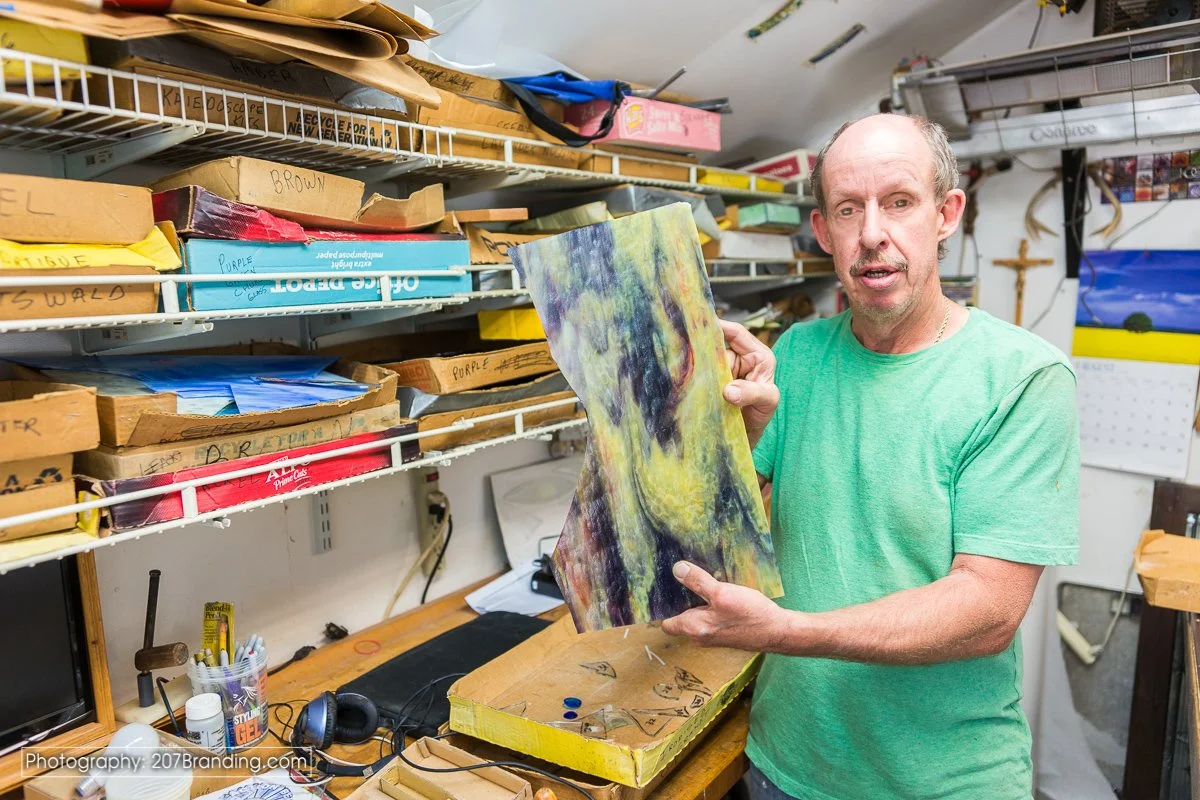
Quick answer: I'm Steve Downing, the stained glass artist behind The Glass Master, a custom studio just north of Denver in Thornton. Before glass, I worked as Executive Chef at one of Denver's largest catering companies. Seeing original Tiffany windows in Washington, D.C. changed my direction, and I founded The Glass Master in 1989. Every piece I make is custom and designed together with the homeowner.

Why I'm Writing This

People who call the studio usually want to know two things: can I build what they're picturing, and who exactly will be doing the work. The answer to the second question is me. So as we start a new year on the blog, I figured it was time to tell you a little about how a chef ended up spending his days cutting glass.

A Career That Started in the Kitchen

Long before I ever held a glass cutter, I was running kitchens. I was Executive Chef at one of the largest catering companies in Denver. That job taught me things I still use every day.

Planning Everything Before You Start

Catering is all about preparation. You don't wait until the guests arrive to figure out the menu. Stained glass works the same way. By the time I cut the first piece, the design, the glass and the layout are all settled.

Presentation Matters

In a kitchen, people eat with their eyes first. In a home, a stained glass window is often the first thing a guest notices. Color, balance and detail aren't extras. They're the whole point.

The Client Is Part of the Process

A good chef listens. The best events I worked on came from really understanding what the host wanted. That's exactly how I approach design now. I don't hand you a catalog page. We build the idea together.

The Windows That Changed Everything

The turning point came in Washington, D.C., where I saw original works by Tiffany in person. I'd seen pictures of stained glass before, but standing in front of the real thing is different. The way the light moved through the glass, the depth of the color, the detail that looked almost painted: it stuck with me.

I came home wanting to learn how that kind of work was made, and I never really stopped. In 1989 I founded The Glass Master, and I've been building custom stained glass for Colorado homes ever since.

What I Do Today as a Stained Glass Artist in Denver

My Signature Technique

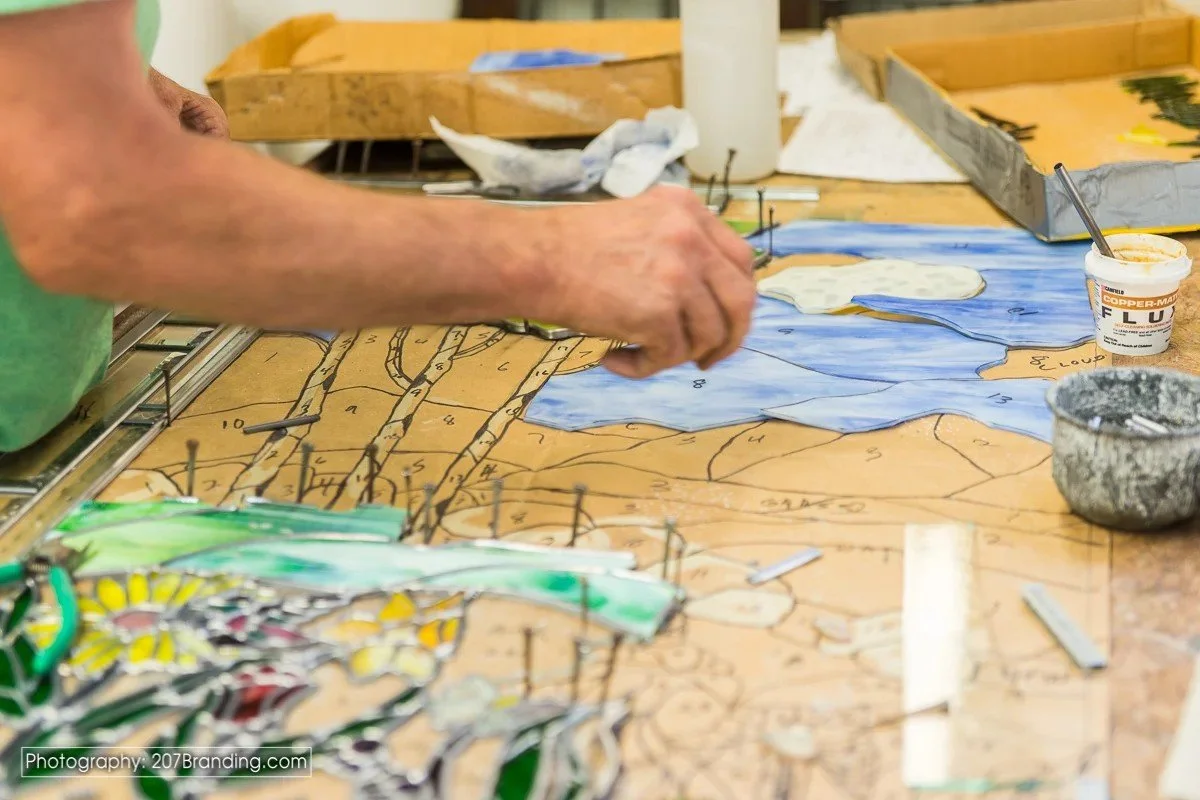
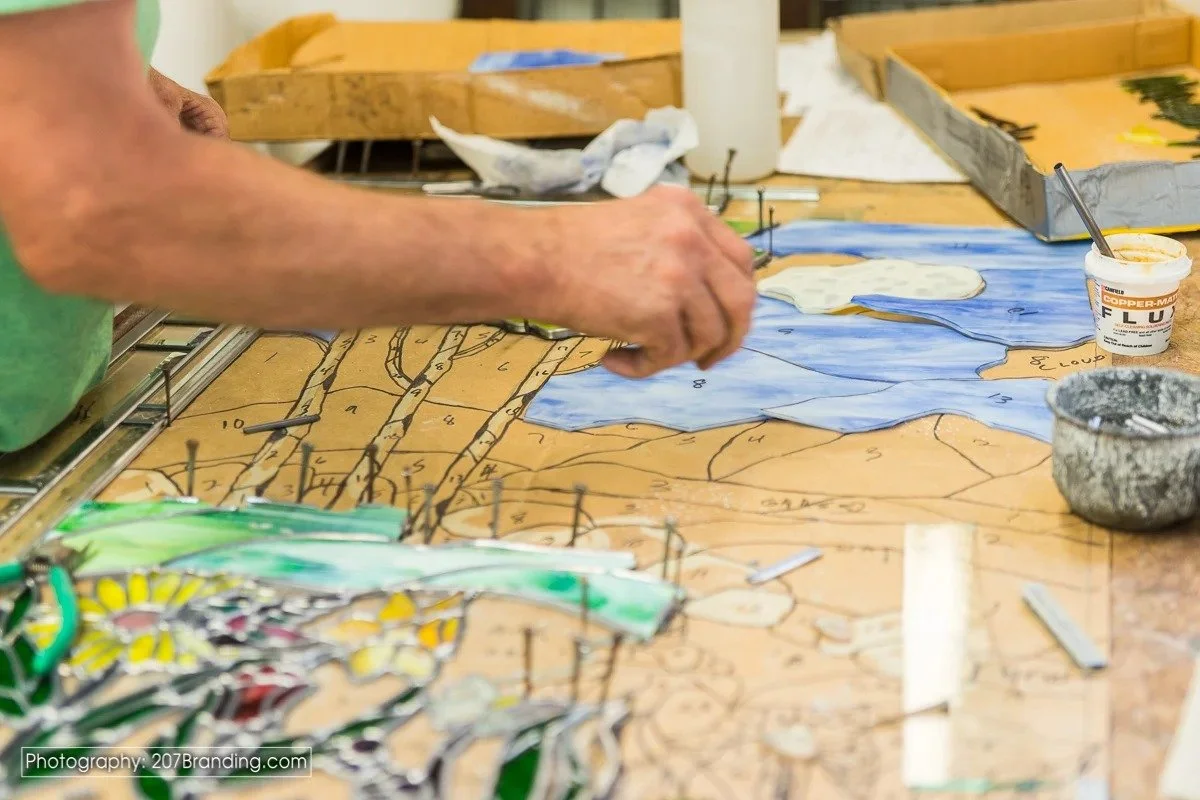
Most stained glass is built one of two ways: with lead came or with copper foil. I combine both. The copper foil lets me work with smaller pieces and finer lines, and the leaded glass gives the window strength and structure. Put together, a finished window can look like it was painted with light.

Every Piece Is Custom

I don't sell one-size-fits-all designs. Full glass door conversions, pantry and cabinet inserts, windows, transoms, sidelights, fireplace screens, wine room doors: each one is designed for one opening in one home.

You're Part of the Design

I believe one of the most important parts of any piece is the client taking part in the design. You know your home, your style and how you live in the space. I know glass, light and how to make a design hold together for the long haul. When we put those together, you end up with something that feels like it belongs.

A Studio Just North of Denver

The studio sits in Thornton, which makes it easy to work with homeowners in Northglenn, Westminster, Broomfield, Brighton, Arvada and all over Denver. I've also built pieces for clients outside Colorado. A lot of my work comes from repeat clients who come back for another piece, and that means more to me than anything I could say about myself.

What I Care About Most

If you ask me what matters most in this business, it's simple: quality work, being transparent about the process, and treating people well. I'd rather spend an extra few minutes explaining your options than have you guess. Stained glass is personal. It should feel that way from the first phone call to the day it's installed.

Frequently Asked Questions

Who designs and builds the stained glass at The Glass Master?

I do. I'm Steve Downing, and I work with each client on the design and build the piece in my studio in Thornton.

When was The Glass Master founded?

I founded The Glass Master in 1989, after a career as an executive chef in Denver.

What kind of stained glass projects do you take on?

All custom work: door conversions, window and door glass, sidelights, transoms, cabinet and pantry inserts, fireplace screens and special projects.

Do I need a finished design before I call?

No. Many clients start with a photo, a color, or just a feeling they want in a room. We shape the design together.

Let's Talk About Your Project

If you're looking for a stained glass artist in Denver or the north metro, I'd love to hear what you have in mind. Call me at (303) 457-1886, 7am to 7pm daily, or send a message through the contact page. You can also read more about me or browse the stained glass gallery.

Stained Glass Repair in Denver: Signs Your Glass Needs Help

Quick answer: If your stained glass has a cracked or missing piece, a panel that bulges or sags, glass that rattles when the door closes, or daylight showing through gaps in the lead, it's time to call a pro. For stained glass repair, Denver homeowners can turn to The Glass Master, Steve Downing's studio in Thornton, just north of the city. Catching problems early usually means saving more of the original glass.

Why the New Year Is a Good Time to Check Your Stained Glass

The holidays are wrapping up, the decorations are coming down, and the low winter sun is hitting your windows at an angle that shows every flaw. That makes the first weeks of the year a great time to walk around the house and really look at your stained glass.

Colorado is hard on glass. We get big temperature swings between day and night, dry air, wind, and the occasional hailstorm. Over the years, all of that can loosen panels and stress the lead and solder that hold a piece together. A quick check now can keep a small repair from turning into a big one.

Signs Your Stained Glass Needs Repair

Cracked, Broken or Missing Pieces

This is the one everybody notices first. A single cracked piece might seem like no big deal, but cracks can spread, and a broken piece weakens the panel around it. If a piece is missing entirely, wind and moisture now have a way in.

Bowing or Bulging Panels

Stand to the side of the window and look across the glass. If the panel curves in or out instead of sitting flat, the structure is tired. Bowing is common in older leaded windows and doors and tends to get worse with time.

Rattling Glass or Loose Lead

If you hear a buzz or rattle when you shut the door or when the wind picks up, the glass is moving inside the lead channels. That movement wears on the panel every single day.

Gaps, Light Leaks and Drafts

Hold your hand near the edges on a cold morning. Drafts or visible daylight around the frame or between pieces mean the panel isn't sealed the way it should be.

Cloudy, Dirty or Darkened Lead Lines

Not every problem is structural. Sometimes years of grime simply dull the colors. A good cleaning can bring a piece back to life, but it should be done carefully so you don't stress already weak joints.

Repair or Full Restoration?

Most problems fall into one of two camps. A repair fixes something specific: a cracked piece, a loose section of lead came (the H-shaped channel that holds each piece of glass), or a failing solder joint. A restoration goes further and addresses a panel that's tired all over, which can mean taking it apart, cleaning the glass and rebuilding it with new lead. The right answer depends on how widespread the damage is, and that's something you only learn by looking closely.

What a Repair Visit Looks Like

Every piece of stained glass is different, so there's no one-size-fits-all fix. The first step is always to look at the glass and figure out what's actually going on: Is it one broken piece, or is the whole panel giving out? Is the frame sound? Is the glass worth saving as-is, or would you be happier with a new design in the same opening?

From there, Steve will talk you through your options in plain language. He's been building and fixing stained glass since he founded The Glass Master in 1989, and his clients count on him to be straightforward about whether a piece is worth repairing. Some panels just need a damaged piece replaced. Others need more involved restoration work. And sometimes the best answer is a brand-new custom piece built to fit the existing frame, something we've done many times for Denver homeowners whose original glass was past saving.

Tips Before You Call

  • Take photos. Get a straight-on shot of the whole piece and close-ups of any damage. It helps start the conversation.
  • Measure the opening. Rough height and width are fine for a first call.
  • Don't tape or glue it. Household tape and glue can leave residue that makes a proper repair harder.
  • Note the location. Is it a front door, a sidelight, a transom, a cabinet? Where the glass lives affects how it's repaired.

Serving Homeowners Across the North Metro

Our studio is in Thornton, which puts us close to homeowners in Northglenn, Westminster, Broomfield, Brighton, Arvada and throughout Denver. Whether your glass is in a historic home near downtown or a newer build out by Brighton, the process starts the same way: a conversation about what you have and what you want.

Frequently Asked Questions

Can a single cracked piece of stained glass be replaced?

Often, yes. In many cases one damaged piece can be removed and replaced without rebuilding the whole panel. Whether that's the right move depends on the condition of the surrounding lead and glass, which is why it helps to have the piece looked at.

Is it worth repairing old stained glass, or should I replace it?

It depends on the glass, the condition and what it means to you. Family or original glass is often worth saving. If the piece is badly damaged or you never liked the design, a new custom piece made for the same opening can be a great option.

Do you repair stained glass in doors as well as windows?

Yes. Doors, sidelights, transoms, cabinets and windows all come through our studio. Doors take more of a beating than windows, so they often need attention sooner.

How do I know if my stained glass is bowing?

Look across the surface from the side. If the panel isn't flat, or if it moves when you press gently near the center, it's likely bowing and should be looked at.

Get Your Stained Glass Looked At

If something in your stained glass doesn't look or sound right, don't wait for it to get worse. Call Steve at (303) 457-1886, any day from 7am to 7pm, or send us a message through our contact page. You can also browse our stained glass gallery for ideas and meet Steve Downing, the artist behind The Glass Master.